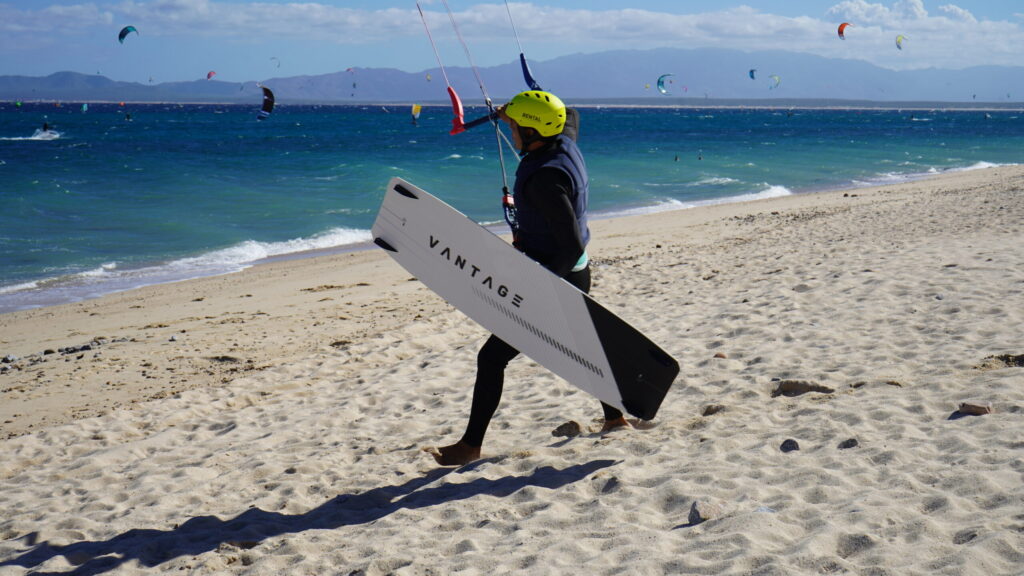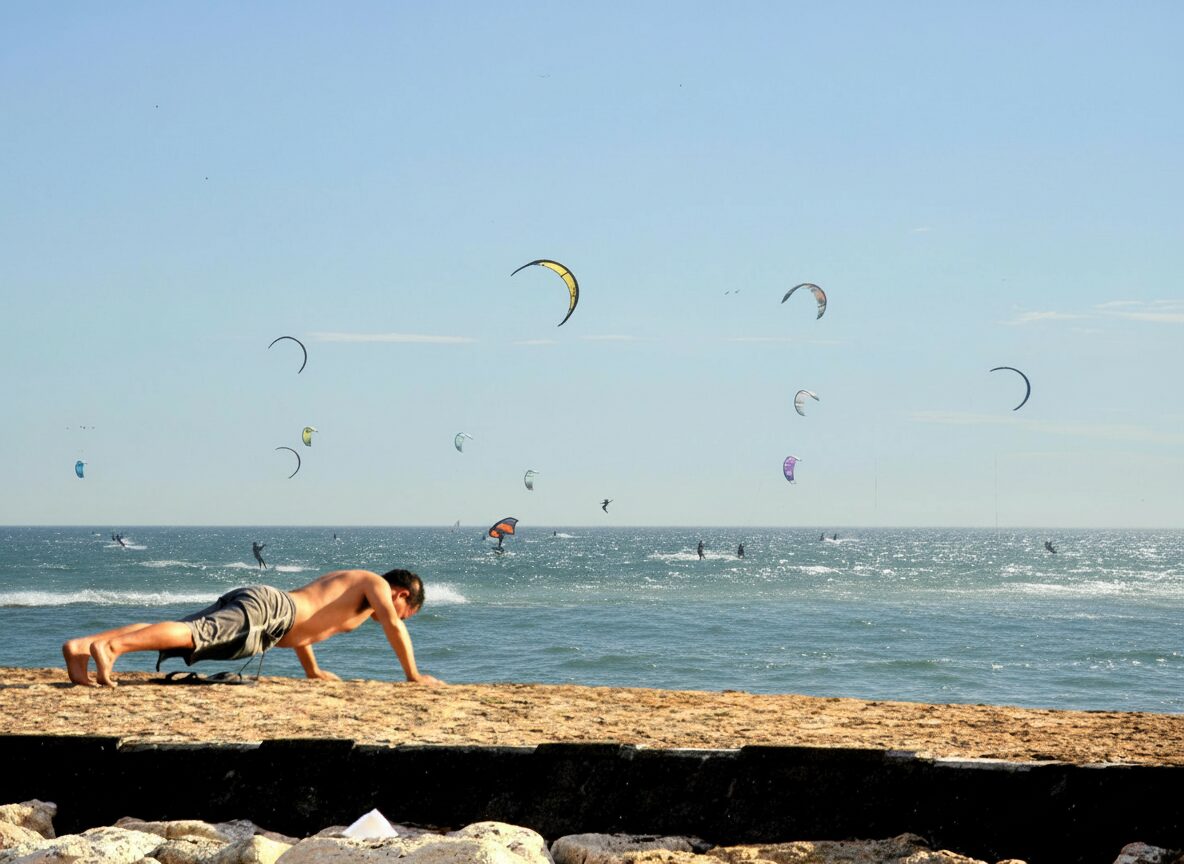
Getting physically ready a few weeks in advance can be the difference between enjoying every day of norte or feeling wrecked after two back‑to‑back sessions. This guide walks you step by step so you arrive strong, stable and with a lower risk of injury to your sessions with Ocean Wind Tribe.
Why prepare before the wind kicks in?
During winter, winds in La Ventana and El Sargento tend to be strong and consistent, which means you can easily ride many days in a row. If your body is not used to this load, key areas like your legs, core and shoulders fatigue quickly and you may start feeling discomfort in your lower back, knees or neck. A simple pre‑season fitness plan helps you to:
- Build more stamina for longer sessions.
- Feel more control on the water.
- Reduce the risk of muscle strains, overuse issues and falls caused by poor stability.
Key goals: core, legs, shoulders and stamina
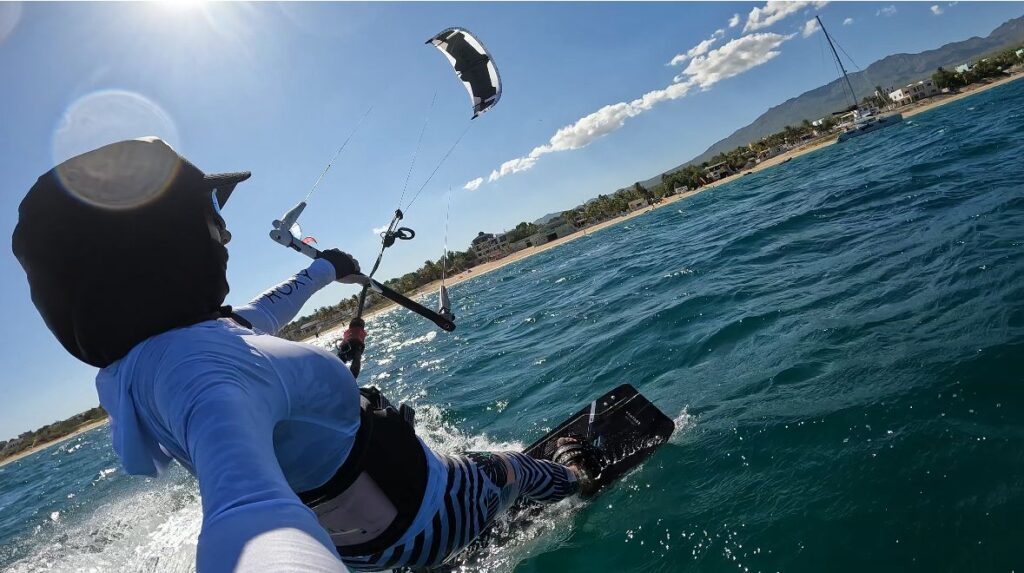
Kitesurfing blends strength, balance and cardio. The main work happens in three zones:
- Core: abs, lower back and hips keep your posture aligned and absorb the pull from the kite.
- Legs: they do most of the work when edging, riding upwind and landing jumps.
- Shoulders and upper back: they hold the bar tension and help direct the kite with precision.
On top of that you need cardiovascular endurance so you can keep good technique even after several waterstarts, walks up the beach and body‑drags against the wind. The goal is not to bulk up, but to become functional, stable and fluid.
Smart warm‑up before every session
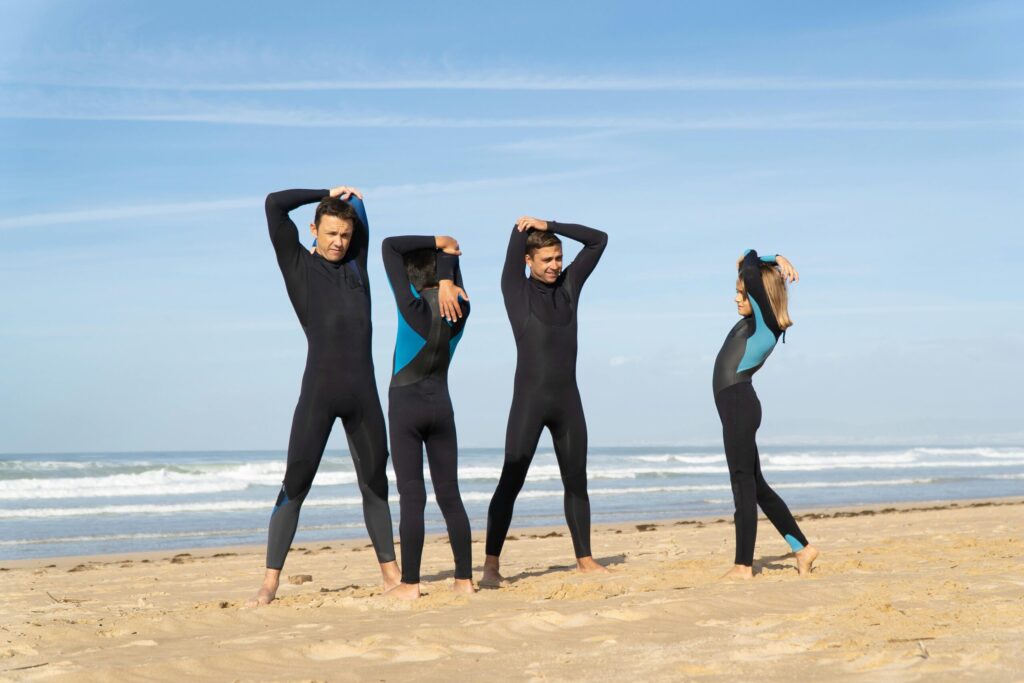
Whether you are at home or already on the beach, a short warm‑up makes a huge difference. Before hitting the water, spend 8–10 minutes on:
- Joint mobility: gentle circles with neck, shoulders, hips, knees and ankles to “wake up” your joints.
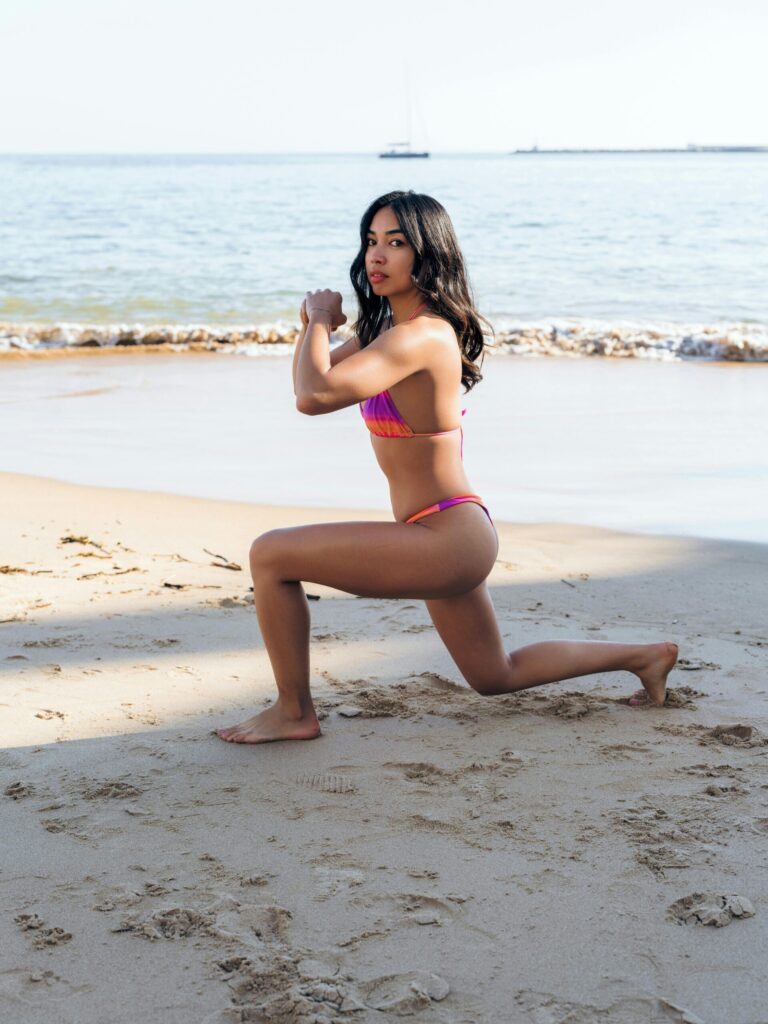
- Light activation: mini squats, bodyweight lunges, short planks and dynamic arm swings that mimic holding and steering the bar.
On colder or windier days in El Sargento, this warm‑up also helps you feel your limits better and prevents you from entering the water stiff, which reduces strains and silly crashes.
Cardio work: last longer on the water
You do not need to become a marathon runner; just give your aerobic system a push 2–3 times per week:
- Easy options: 20–30 minutes of light jogging, cycling or swimming at a comfortable pace.
- Slightly harder options (once you have a base): short intervals such as 1–2 minutes faster and 2–3 minutes easy, repeated several times (a moderate HIIT style).

Imagine a pre‑season week in El Sargento: two sunrise runs along the beach and one day of cycling or hiking in the hills. This will boost your recovery between strong kite pulls and help you get more out of every lesson or free session.
Functional strength: key exercises for kiters
The strength you need for kitesurfing is functional, not just aesthetic. These moves work well 2–3 days per week (30–40 minutes):
- Legs
- Core
- Upper body
Do 2–3 sets of 8–12 reps per exercise, keeping technique as your priority. It is better to do less with perfect form than more with poor control.
Balance and stability: your “sixth sense” on the board
Balance is one of the hidden secrets behind good board control, especially in chop or gusty wind. You can train it with:
- Single‑leg stands (20–30 seconds per side), first on the floor, then on a slightly unstable surface like a folded towel.
- Assisted single‑leg squats, holding onto a wall or table.
- Quick side‑to‑side steps or lateral shuffles to mimic your reactions on the water.
Adding 5–10 minutes of balance work at the end of your strength sessions will improve how you react when a gust hits, when you land a jump or when you need to correct your edge riding upwind.

Stretching and post‑session care
After riding or training, it is time to give something back to your body. Spend at least 10 minutes stretching:
- Hamstrings and quadriceps.
- Hips and hip flexors, heavily used when riding in a semi‑bent stance.
- Lower and upper back with gentle cat‑cow and rotation stretches.
- Chest and shoulders, opening the area that spends a lot of time pulling on the bar.
You can add 1–2 weekly sessions of light yoga or general mobility. In spots like La Ventana and El Sargento where windy days tend to stack up, these calmer sessions help you keep riding without crossing the line into overuse and injury.
Sample pre‑season week
To make it more practical, here is a simple template (adapt it to your level and schedule):
- Monday
- 25 minutes easy cardio (run or bike).
- 10 minutes basic stretching.
- Tuesday
- Functional strength (legs + core + upper body) 35–40 minutes.
- 5 minutes single‑leg balance work.
- Wednesday
- Active recovery: longer walk, light mobility or gentle yoga 20–30 minutes.
- Thursday
- Friday
- Functional strength again, changing some of the exercises.
- Deeper stretching at the end.
- Weekend
- If there is wind: 1–2 water sessions plus post‑session stretching.
- If not: light activity and mobility work.
The real game‑changer is consistency for 3–4 weeks before the wind season gets intense.
Show up ready to ride with Ocean Wind Tribe
Starting the wind season physically prepared means more fun and less worry about fatigue or nagging pains. At Ocean Wind Tribe, the crew supports your progress on the water, but arriving with a solid fitness base speeds up your learning curve and lets you squeeze every bit of joy out of each lesson, downwinder or free ride session. If you are planning your next trip to El Sargento, you can start with this plan today, and when the norte starts blowing, your body will already be ready to fly.