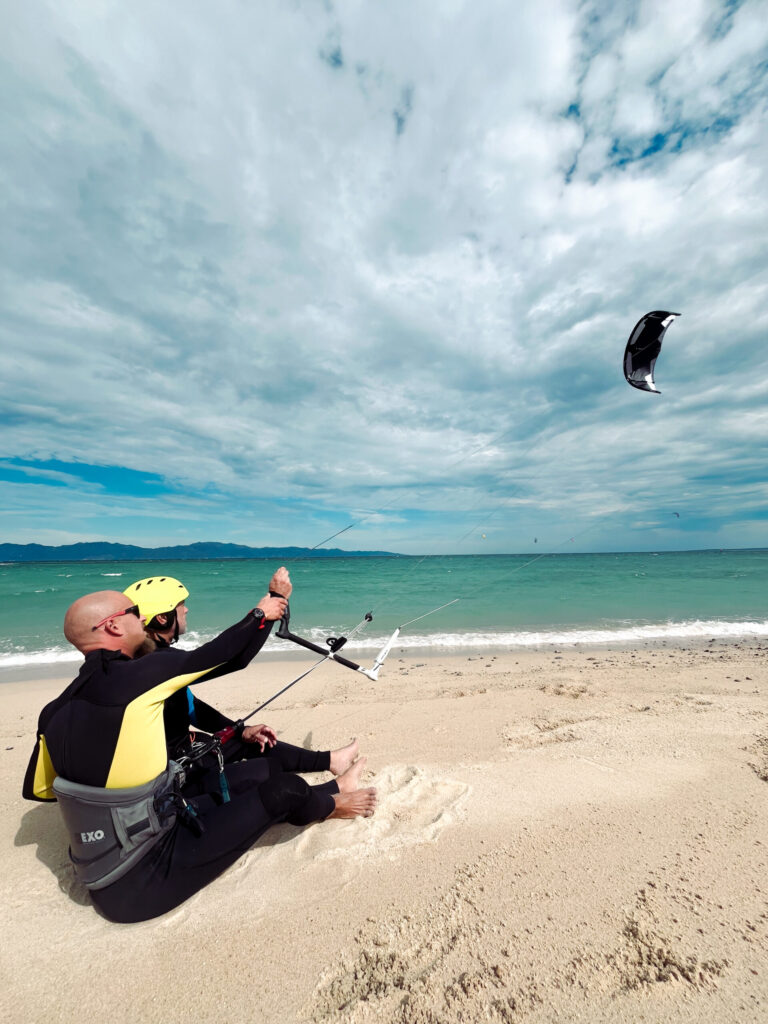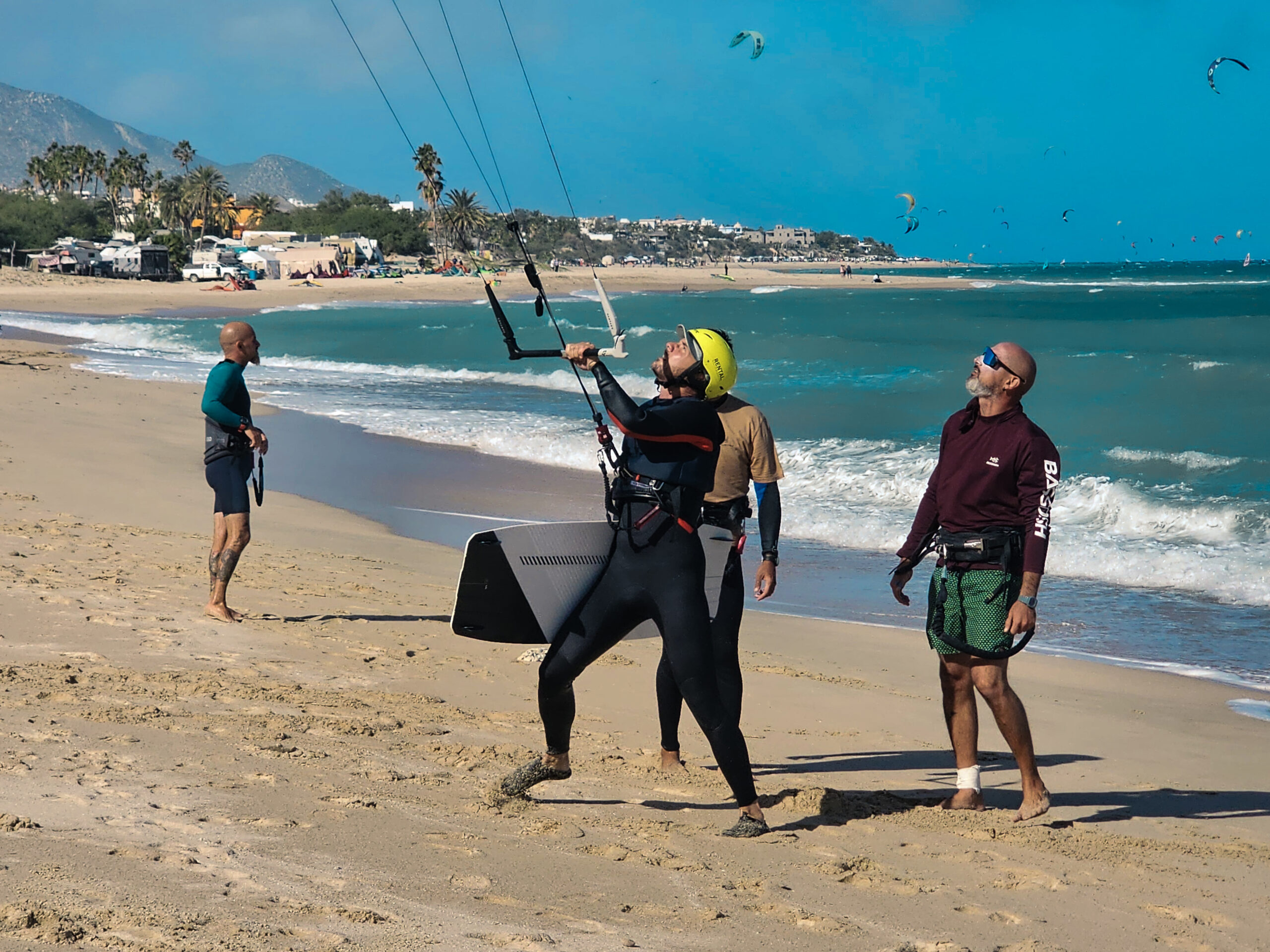
In kitesurfing, the wind is your engine: without wind you don’t ride; with too much, you lose control; with the right amount, everything flows. Understanding it helps you choose the right kite, decide if it’s a good day for your level, and spot when it’s better to stay on the beach.
It also:
- Gives you independence: you don’t depend so much on what other riders say.
- Increases your safety: you avoid going out on gusty days or with wind directions that are dangerous for learning.
- Makes the most of your trip to Baja California Sur: less doubt, more water time.
Basic Concepts to Read the Wind
Wind Direction: onshore, side‑shore and offshore
In kitesurfing, wind direction is usually described like this:
- Onshore: the wind blows directly from the sea toward the beach.
- Side‑shore: the wind blows parallel to the coast.
- Side on‑shore / cross on: it comes a bit from the sea and a bit from the side.
- Offshore: the wind blows from the land toward the sea (dangerous if there is no rescue boat).
For beginners, the safest winds are usually side‑shore or side on‑shore: they keep you relatively close to the coast and make it easier to come back.
In El Sargento and La Ventana, during a large part of the season you enjoy winds that tend to be side‑shore / side on‑shore, which is one of the reasons these bays are so popular for learning and progressing.
Mini check 1 – Direction
Before inflating your kite, ask yourself:
- Can I say out loud where the wind is coming from (from the sea, from the land, from the side)?
- Do I know if today is side‑shore, onshore or offshore?
- Do I know why this direction is safe or not for my level?
If you answer “no” to any of these, it’s the perfect time to ask your instructor or a trusted local rider.
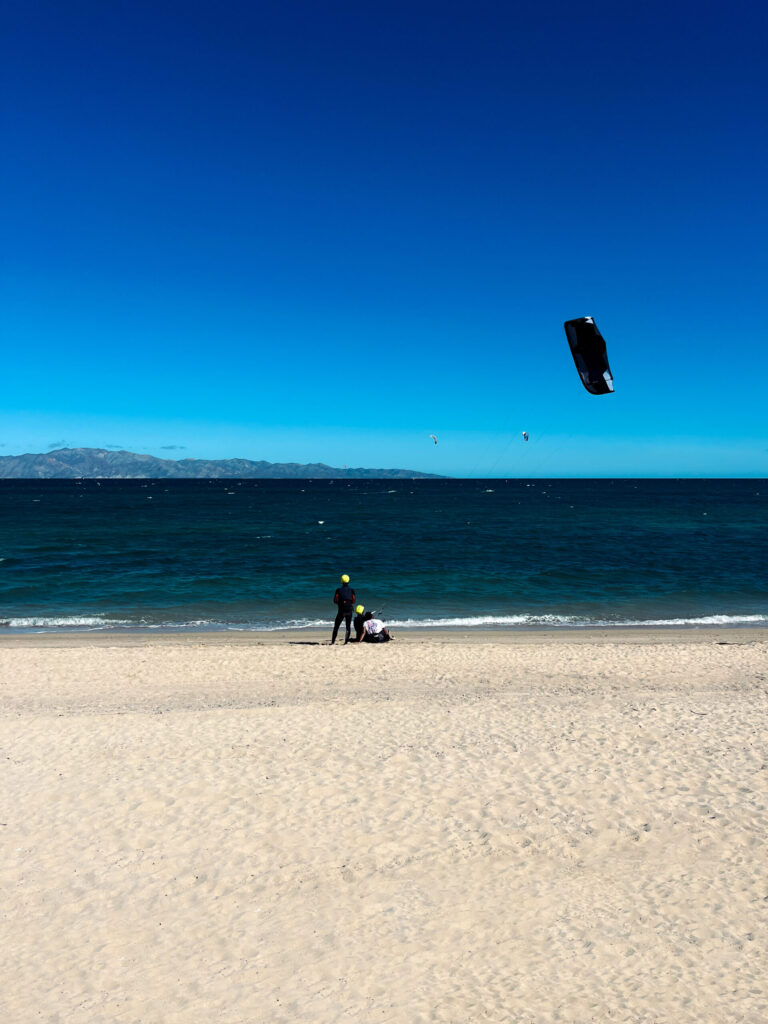
Wind Intensity: knots that really matter
In kitesurfing we use knots to measure wind intensity. Although it varies depending on weight and gear, a very general guide could be:
- 10–15 knots: light wind, ideal for first lessons with big kites and light riders.
- 16–22 knots: medium wind, a very fun and manageable range for most levels.
- 23–28 knots: strong wind, already requires good technique and kite control.
- 29+ knots: very strong wind, advanced / expert, especially with swell or gusts.
On many days in the main season in La Ventana, it’s normal to see sessions in the 16 to 25 knot range, where the spot feels alive but still manageable for riders who already have a solid base.
Mini check 2 – Intensity
On the beach, before setting up, ask yourself:
- How many knots is today’s forecast showing? (even if it’s approximate).
- Is this wind range coherent with my level (first lesson, waterstart, upwind, jumps)?
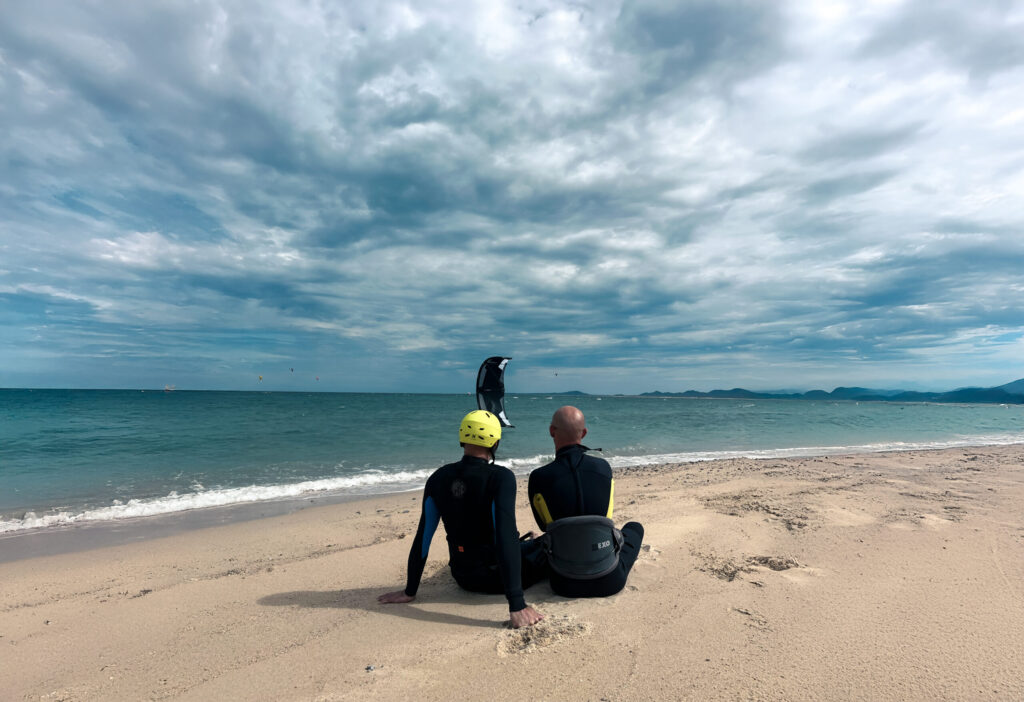
Steady Wind vs. Gusty Wind
It’s not just about how “strong” it blows, but how it blows.
- Steady wind: it blows most of the time at a similar intensity, with small variations. It’s more predictable, comfortable and safe, ideal for learning.
- Gusty wind: it goes up and down a lot, with strong gusts and very light moments. It feels as if your kite “pulls” suddenly and then falls.
One of the reasons Baja California Sur is so valued for kitesurfing is that, for a good part of the season, the wind tends to be relatively steady compared to other, much gustier destinations.
Mini check 3 – Stability
While you’re watching the spot:
- Do you see kites moving with sudden jerks or do they look smooth?
- Do the flags change a lot in intensity (inflating and deflating) or do they stay firm?
- Do the riders look overpowered (leaning back a lot, edging hard to slow down)?
If everything looks very “nervous”, it might be a day to go out with more caution or choose a smaller kite.
How to Read the Wind on the Beach, Step by Step
1. Look at flags, palm trees and the sea
Before opening your backpack, look around:
- Flags and windsocks: they show you direction and whether the wind is light, medium or strong depending on how much they inflate.
- Palm trees and other trees: soft movement = light wind; leaves and branches moving a lot = probably more than 20 knots.
- Sea surface:
- Almost flat water with small ripples: light wind.
- Marked chop and whitecaps (white crests): usually 16+ knots.
In La Ventana and El Sargento, that moment when you start seeing more whitecaps in the bay usually coincides with the daily wind “turn on”: it’s the classic sign that the session is starting.
2. Watch other kitesurfers
Riders in the water are your best “sensor” for the real wind.
Pay attention to:
- Kite size: if you see a lot of 9–10 m kites pumped up and most people are around your weight, you can guess it’s a medium-wind day.
- Body position on the water:
- If everyone is riding relaxed, with good speed and without fighting too much, the kite size is probably right.
- If you see a lot of people edging hard, getting lifted from the beach easily or riding with the kite very high just to “survive”, it’s probably strong wind for your level.
Mini check 4 – Reading other riders
- What kite size do you see most often on the beach?
- Is it coherent with what you were planning to use for your weight and level?
- Do you feel comfortable going out with what you see, or would you rather choose a smaller kite for safety?
3. Use forecast apps and websites
Tools like Windguru, Windy or similar give you a forecast of direction, intensity and gusts.
Quick tips:
- Check the time window when you usually ride in El Sargento/La Ventana (e.g. 12:00 to 17:00) and see how the wind evolves.
- Don’t focus on just one number: also look at the gust column; if there’s a big difference between average wind and gusts, expect a gusty day.
- Watch the spot’s “pattern”: after a few days here, you’ll see that the wind often starts light and builds in the afternoon, which is typical of the area.
Learn to Read the Wind with the Tribe
At Ocean Wind Tribe we don’t just put a harness and a kite on you, we also teach you to understand the wind for life.
In our lessons:
- We cover wind theory, safety, and how to interpret direction and intensity for your level.
- We go through the day’s forecast with you, compare it with what we see on the beach, and help you identify the best wind for your progression.
- On the water, we reinforce these concepts: what it feels like to be overpowered, how to react to a gust, and when it’s time to come out and rest.
And if you want to take your relationship with the wind even further, you can join our kitecamps in Yucatán, where we combine intensive sessions in a different Mexican spot with technical coaching, applied theory and a strong tribe vibe.
Ready to stop “guessing” the wind and start reading it like a real rider? Write to us and we’ll help you choose the best time to come to El Sargento/La Ventana and start your kiter journey with the tribe.