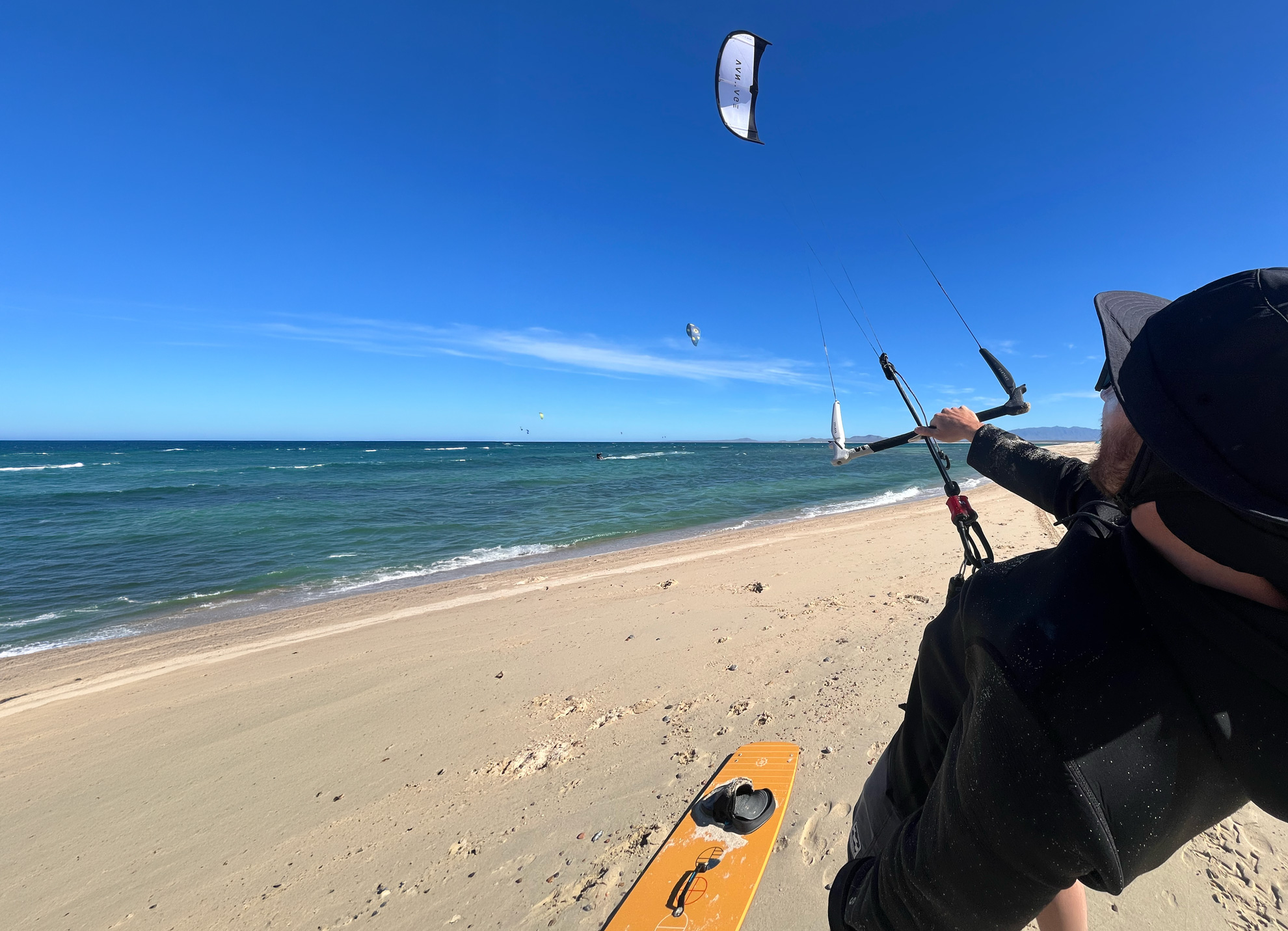
Kitesurfing seems intimidating at first: giant kites, tight lines, and wind pushing you out of control. But when you learn with a solid safety foundation, it becomes a sport full of adrenaline and fun.
In this article, we share the 12 essential tips every beginner should know before their first session. These proven tips will help you progress quickly and without unnecessary scares.
Before getting in the water
1. Choose a spot designed for beginners
Wide beaches without obstacles like rocks, piers, or buildings directly downwind are ideal for starting out.
Prioritize areas with kitesurf schools and rescue services, where experienced riders can help you. Before launching, check the surroundings to avoid surprises.
2. Respect the safe wind range
For beginners, stable wind between 12 and 30 knots is recommended.
Avoid gusty conditions, thunderstorms, or sudden wind shifts that can make control harder.
Always check with local instructors if you have any doubts.
3. Always start with certified lessons
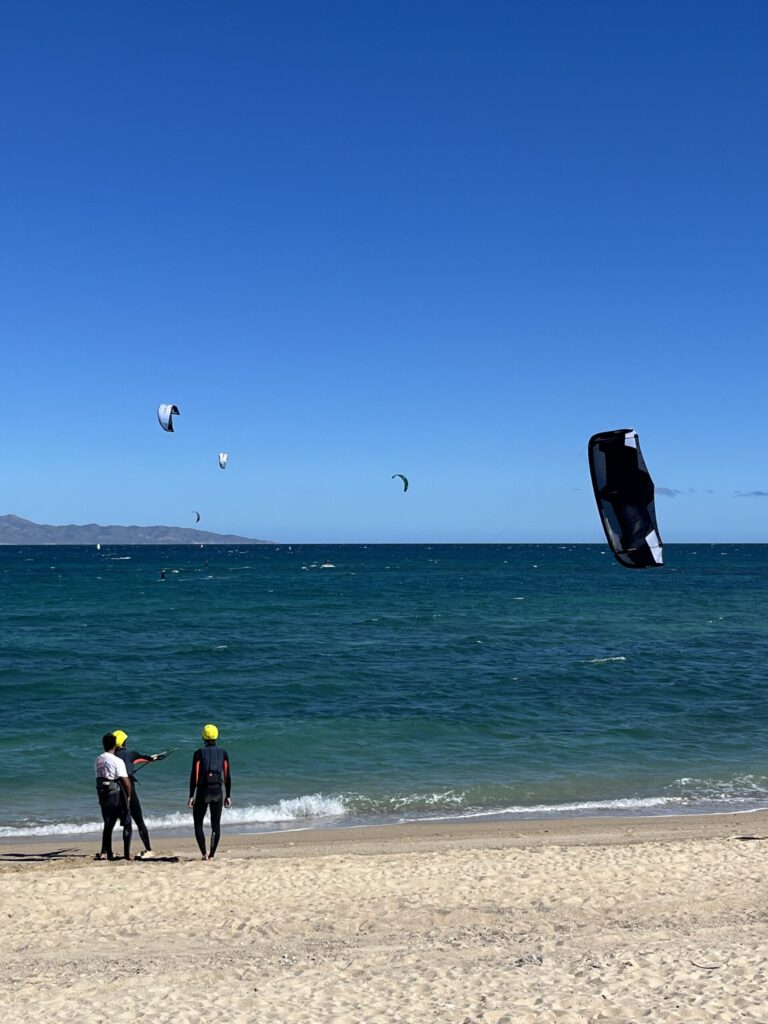
A certified instructor teaches you safety protocols, self-rescue, and kite handling from day one. The typical progression includes land theory, body drag, relaunching, waterstart, and independent riding, reducing common mistakes.
Don’t improvise; a few guided hours are worth more than trying on your own.
Equipment and safe preparation
4. Know every safety system on your gear
Identify how to release the bar, activate the chicken loop quick release, and use the leash before you get in the water.
Practice these moves on land until they become second nature. This habit helps prevent panic in the water.
5. Use the right helmet, impact vest, and leash
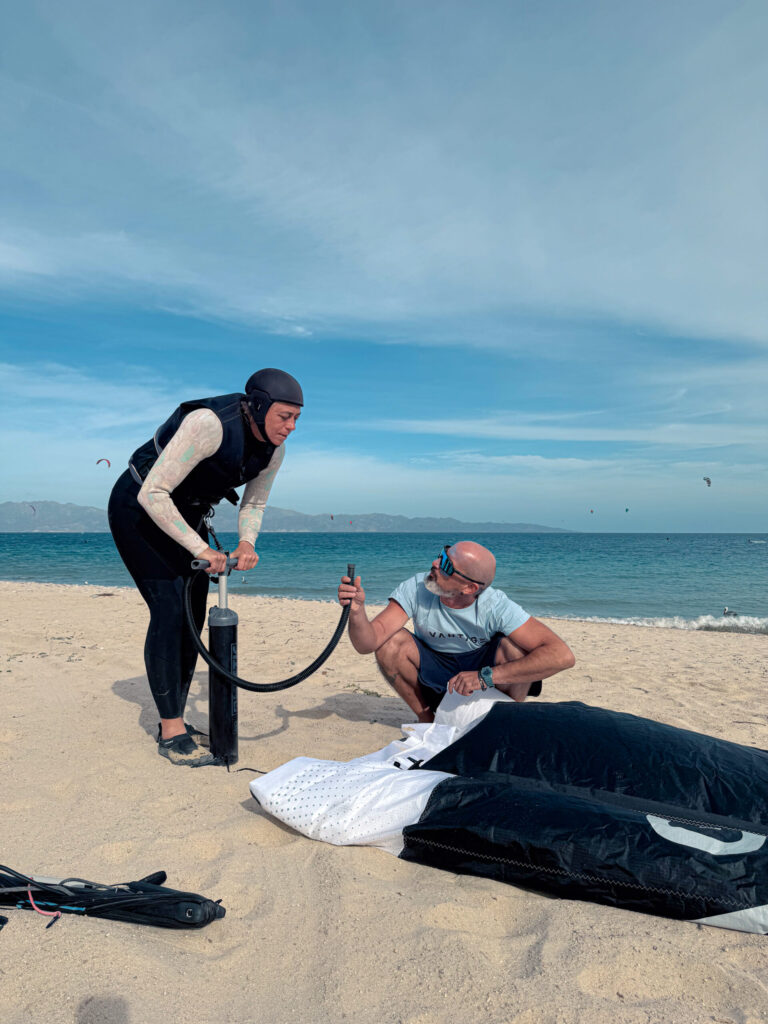
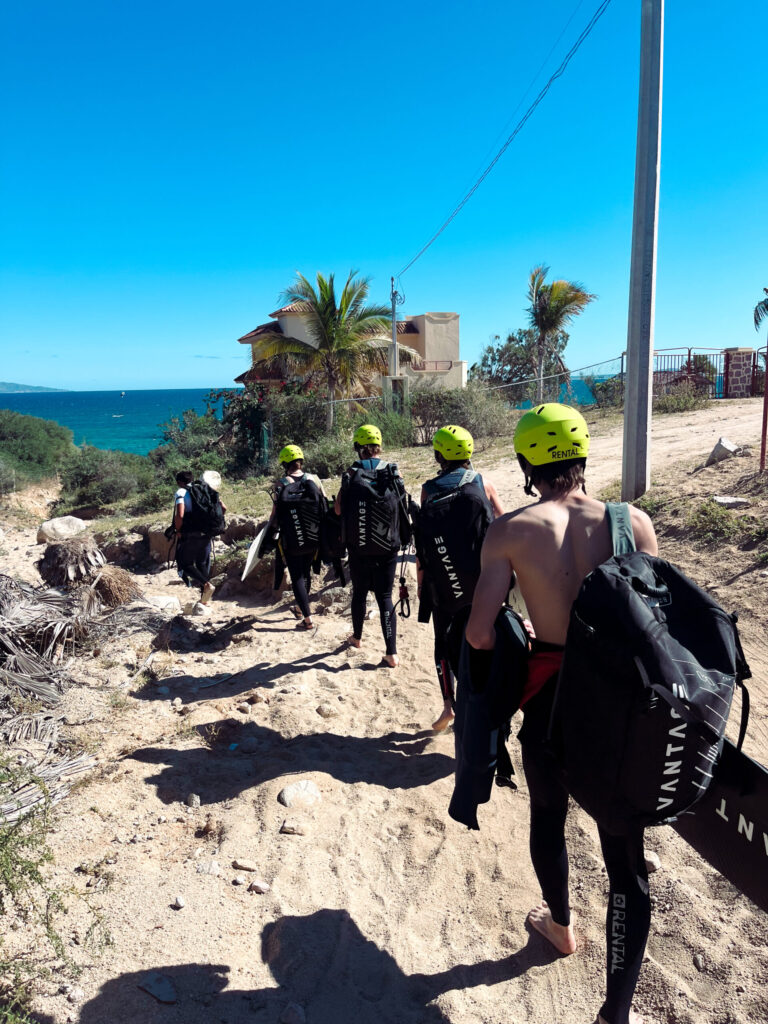
Helmet and impact vest protect your head and torso during crashes. Choose a board leash specifically designed for kitesurfing, properly fitted and without homemade modifications. If you rent, check that the lines, valves, and bar are in good condition.
6. Pick the right kite for the day’s wind
A kite that is too big in strong wind is dangerous for beginners. Adjust the size to your weight, level, and the conditions of the day; ask at the school if you’re unsure.
During the session
7. Master the basic rule: release the bar
If you feel like you’re losing control, release the bar completely; in most cases the kite will lose power.
Don’t fight it with force; trust the systems designed for that. Practice this in low-power sessions.
8. Keep the downwind area clear
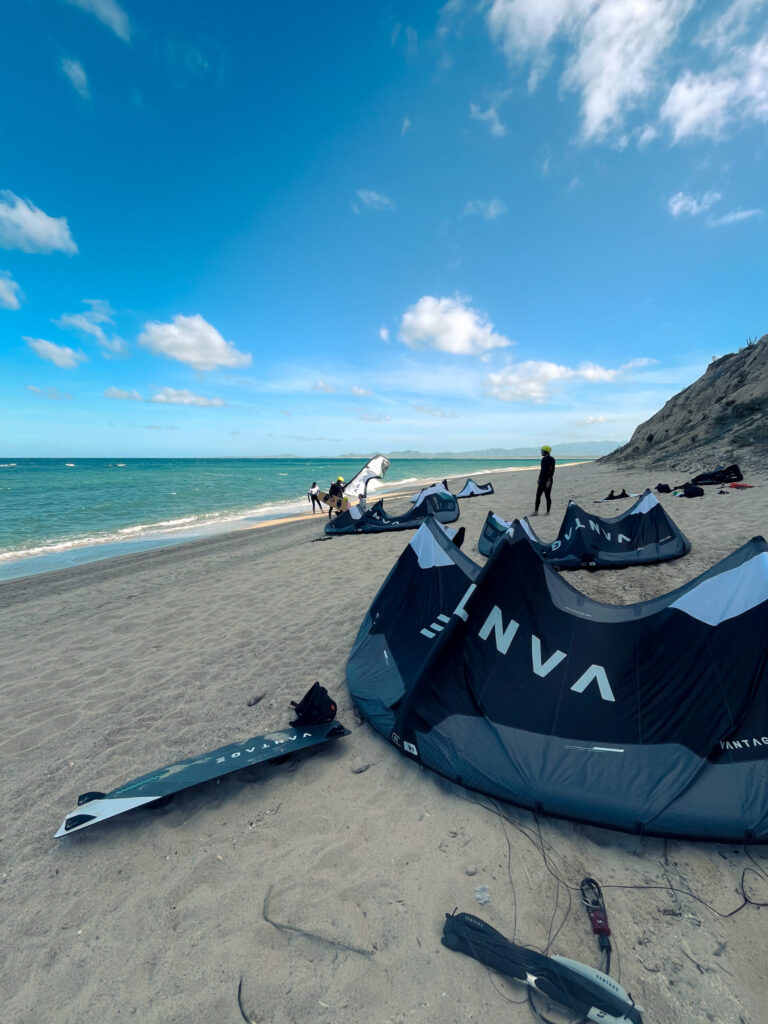
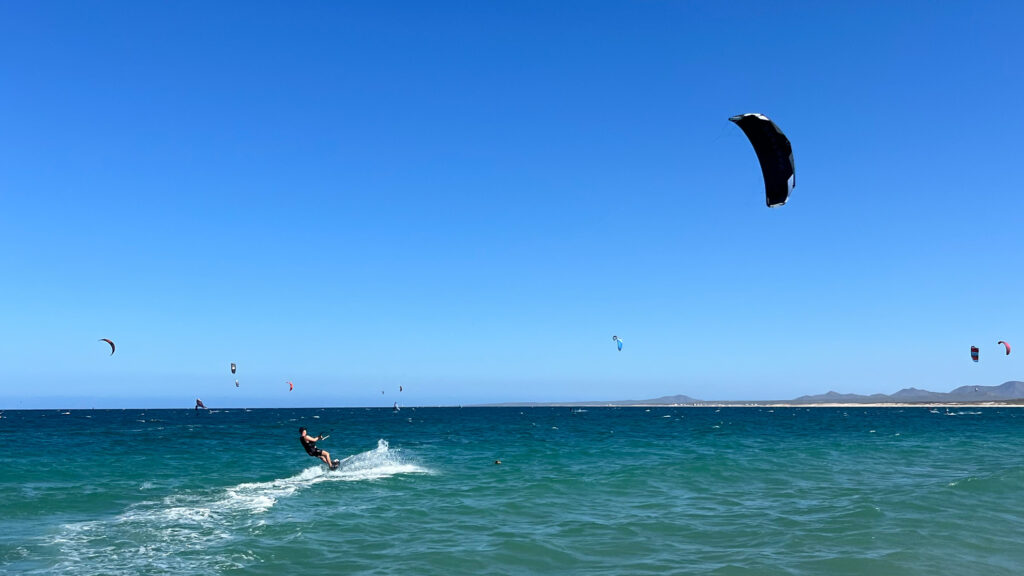
Keep the downwind area (downwind, or in the direction the wind is blowing) of your kite clear: people, rocks, or structures can cause accidents.
Scan for swimmers, buoys, boats, and currents before launching. Position yourself downwind of other riders when learning.
9. Learn body drag with confidence
Master body drag to recover your board safely; it is the foundation before the waterstart.
Practice it both upwind and downwind until you can move with precision.
Backup plan and safe mindset
10. Have a self-rescue plan
Learn how to depower the kite, wind in the lines, and use it as a sail to return to shore. Know the local protocols: exit zones, rescue channels, and emergency contacts.
11. Respect your physical and mental limits
Stop if fatigue prevents you from controlling the bar or the board. Rest after crashes or scares to reflect and learn. Good physical conditioning helps prevent injuries.
12. Safety is part of the community
Listen to local riders about currents and wind changes. Respect distances and right-of-way to avoid downwind collisions.
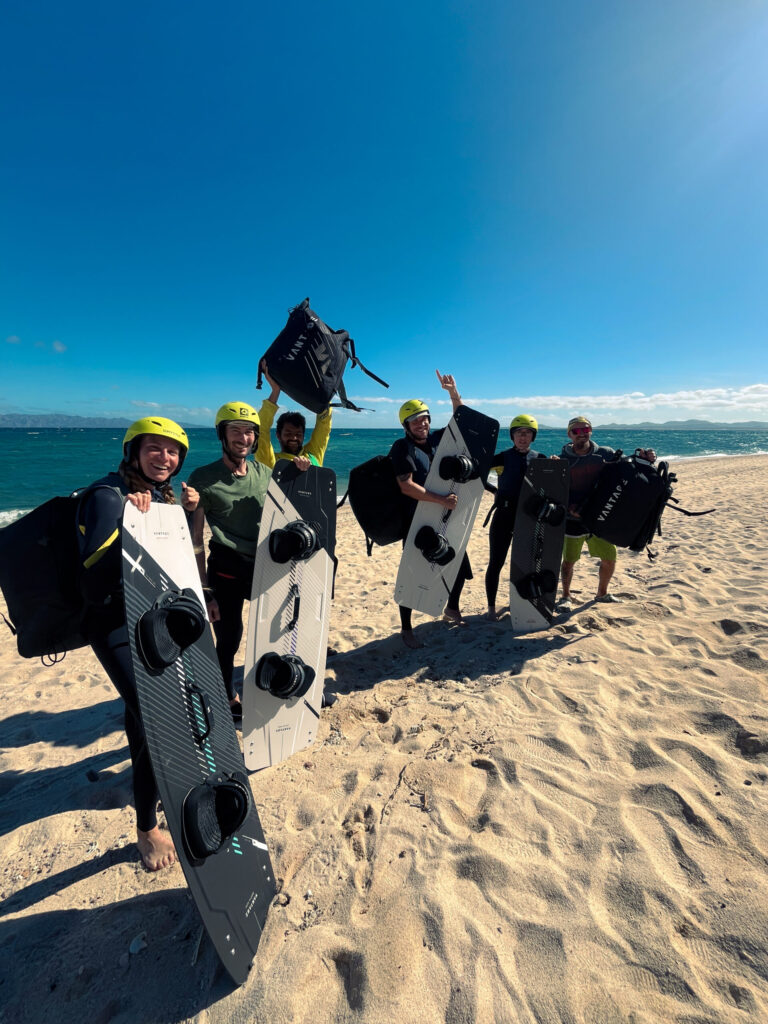
Kitesurf safety is not optional; it is what makes the sport an unforgettable experience. Look for a certified school for your first course and start with confidence.
At Ocean Wind Tribe, we have certified instructors who can make your experience the adventure of a lifetime. Join a lesson or reserve your spot in one of our kitecamps.